
Web Development
How LLMs Understand Your Website Content
With large language models (LLMs), search engines and AI can better understand the content of websites. While traditional algorithms have focused on keywords, LLMs go deeper, analysing meaning and intent. Therefore, simply using keyword stuffing won't work.
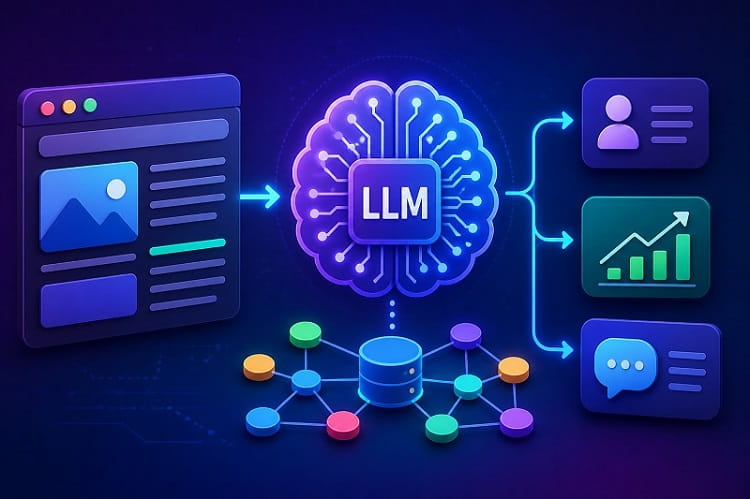
Search engines are evolving quickly, and large language models (LLMs) are a big reason behind that change. Earlier, ranking mostly depended on keywords, but now search systems try to understand the meaning behind the content.
Because of this shift, simply repeating keywords is no longer effective. If you manage a website or create content, it’s important to understand how LLMs interpret information. This will help you create content that not only ranks better but also genuinely helps users.
How LLMs Actually Read Your Content
LLMs don’t read content the way traditional algorithms did. Instead of scanning for specific keywords, they look at how words are used together and what the overall message is.
They analyse things like sentence flow, context, tone, and topic relevance. In simple terms, they try to understand what you are really saying. If your content clearly answers a question or explains a topic well, it is more likely to perform better.
That’s why content written in a natural and clear way works much better than forced or repetitive writing.
Why Context and Meaning Matter More Than Keywords
Modern search systems rely heavily on context. This means your content should not revolve around just one keyword. Instead, it should cover the topic in a complete and meaningful way.
For example, if your page is about improving a website, it should naturally include related ideas like:
- User experience
- Page speed
- Mobile responsiveness
- Content clarity
When your content connects these ideas smoothly, it becomes easier for LLMs to understand the depth of your topic. This also makes your content more useful for readers.
Content Structure Still Plays a Big Role
Even though LLMs are advanced, structure still matters a lot.
Well-organised content helps both users and search systems. Using proper headings, short paragraphs, and clear sections makes your content easier to follow.
If your content looks clean and is easy to scan, it increases the chances that users will stay longer on your page—and that’s always a positive signal.
Writing Content That Matches User Intent
One of the biggest advantages of LLMs is their ability to understand intent. They don’t just focus on what users type—they try to figure out what users actually want.
So while writing content, think about:
- What problem is the user trying to solve?
- What kind of answer are they expecting?
Your content should directly address these points. Adding examples, practical tips, or simple explanations can make a big difference.
When your content truly helps users, it automatically becomes more valuable.
How to Make Your Content LLM-Friendly
- Write in a clear and natural tone
- Cover the topic properly without unnecessary repetition
- Keep your sentences simple and easy to understand
- Update your content regularly
- Make sure your website is fast and mobile-friendly
Conclusion
LLMs have changed the way content is evaluated. It’s no longer just about keywords—it’s about meaning, clarity, and usefulness.
If you focus on writing content that genuinely helps people and explains topics clearly, you’re already on the right track.
In the long run, content that is easy to understand and truly valuable will always perform better—no matter how search technology evolves.

Turn this into a plan for your site
Get a prioritised audit covering technical health, content gaps and AI-search readiness.