
AI SEO & GEO
How AI Search Engines Rank Content (Google AI + ChatGPT Explained)
Search engines not only compare keywords but also analyse intent. The approach to content ranking has changed for search engines like Google and AI programs such as ChatGPT. Content today is ranked based on usefulness and relevance rather than just keyword density.
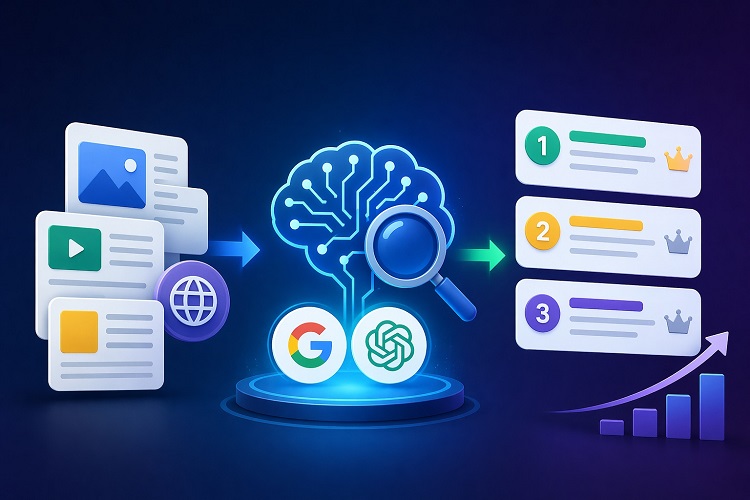
Search engines not only compare keywords but also analyse intent. The approach to content ranking has changed for search engines like Google and AI programs such as ChatGPT. Content today is ranked based on usefulness and relevance rather than just keyword density. This is because contemporary AI considers usefulness and authority.
Finding out what people are looking for instead of keywords
When people look for something, AI search engines pay more attention to what they really mean. Systems no longer rely on exact terms. When someone types best laptop for students, the AI knows they want more than just a description.
When you read something, it should naturally and clearly answer real problems. Stuffing keywords into a page no longer works. Instead, write casually and give people what they want. This will help your rankings. AI likes content that seems helpful and human.
What Part Do Quality and Depth Play?
Well-written, meaningful content is a vital element for ranking well with AI-based search engines. In artificial intelligence search engines, content is assessed based on its originality, value, and coherent organisation, with greater weight given to content that provides an elaborate rather than a superficial answer. Content is better ranked in artificial intelligence systems where it is well-organised, easy to understand, provides valuable information and solutions, and has a logical flow. Brief or plagiarised content does not make sense to the audience. Readability of content plays a crucial role in artificial intelligence systems that consistently lead to positive outcomes and help to rank content.
E-E-A-T stands for Experience, Expertise, Authority and Trust:
AI search engines value Experience, Expertise, Authority, and Trust, in short, we write it E-E-A-T. These cues help readers trust your content.
Things based on real events or on trustworthy sources rank higher in search results. AI ensures the info is correct and that you can trust it. Adding cases, clear explanations, and useful data makes something more trustworthy.
Your website must look good. Things that are constant, honest, and well-researched gain credibility over time. AI systems give things that people trust more weight. In today's SEO tactics, being real is more important than ever.
Important Signs That Users Are Engaged
In addition to looking at what the user has posted, AI looks at the surrounding discourse on the post. It uses various factors such as click-through rate, bounce rate, and time spent reading the post to determine whether the post has high-quality content.
AI and NLP techniques are applied
NLP enables engines to understand how people communicate, helping AI comprehend tone, message, and context. The technique emphasises concepts rather than keywords, connecting relevant ideas. AI prefers human-like writing that provides clear answers and mimics human communication patterns.
Content made by AI and humans working together, is rising
Google still likes it when people write their own content, even though AI tools are used to make a lot of content now. Much of the time, content created solely by computers is boring and lacks originality.
It works best when people use their own imagination alongside AI assistance. AI helps writers study and plan their work. Then, they add their own ideas and clarity to make it better.
Search engines can tell when a program isn't working right, so it's important to be unique. It stands out when you add new ideas, examples, and real value to something. Finding a way to be both quick and real is key to the future of ranking. This means using AI wisely without losing the human voice.
Conclusion
Ranking through artificial intelligence search engines has changed. The approach should not follow fleeting trends; rather, there is a need to provide information that will be useful and relevant to users’ needs. Adopt an approach that will help the reader, whether it's Google or ChatGPT.


Turn this into a plan for your site
Get a prioritised audit covering technical health, content gaps and AI-search readiness.